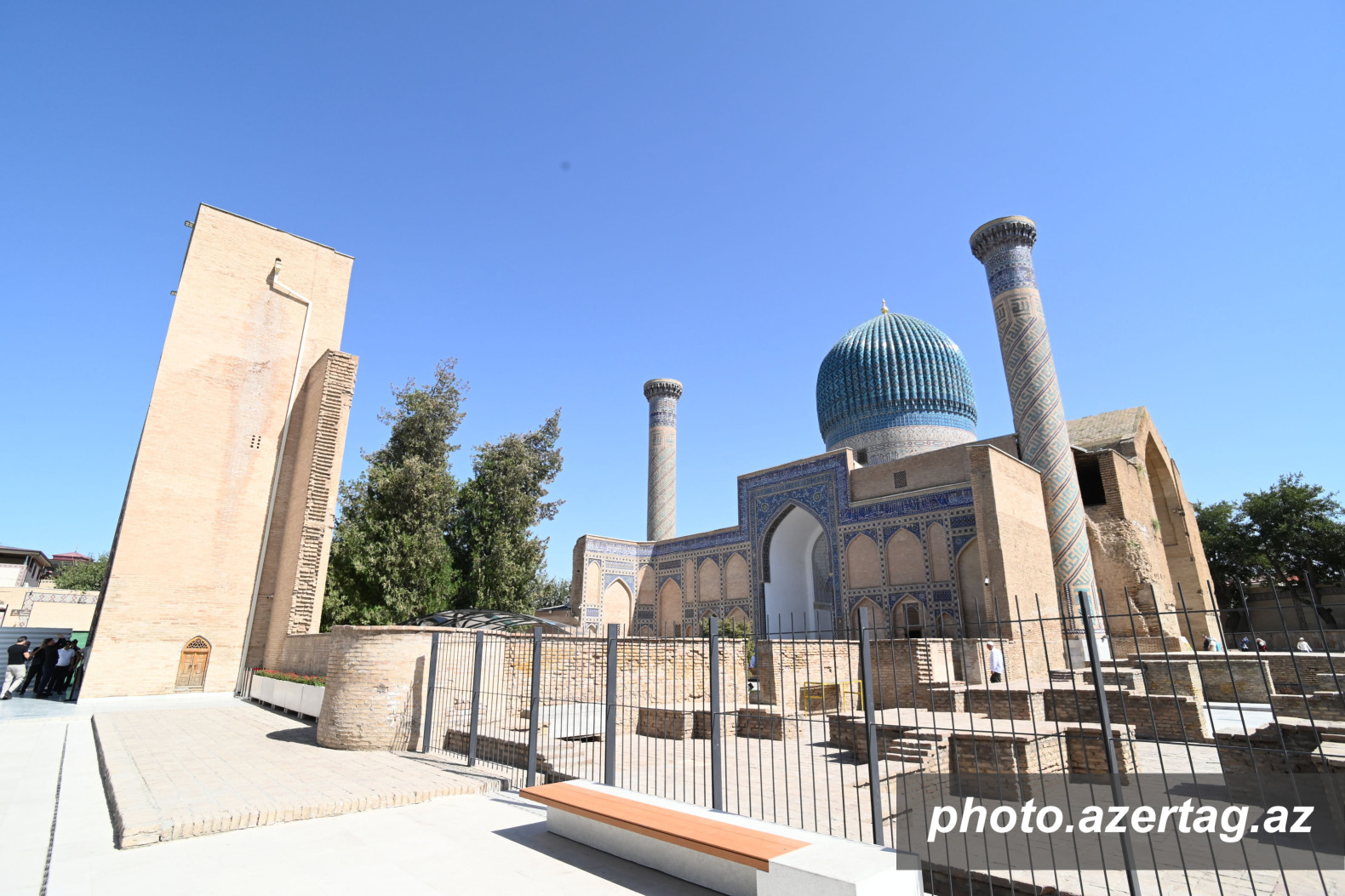
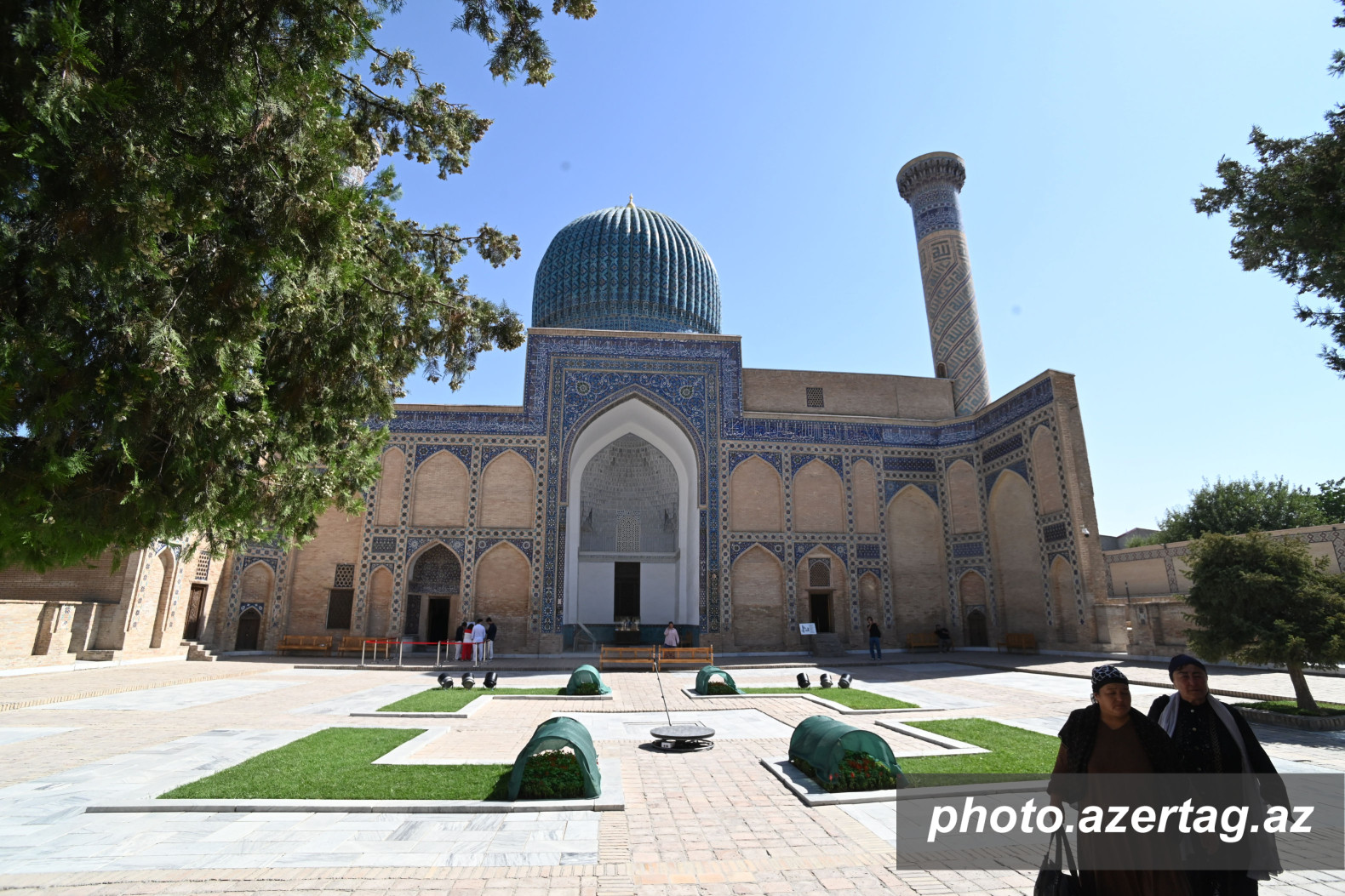
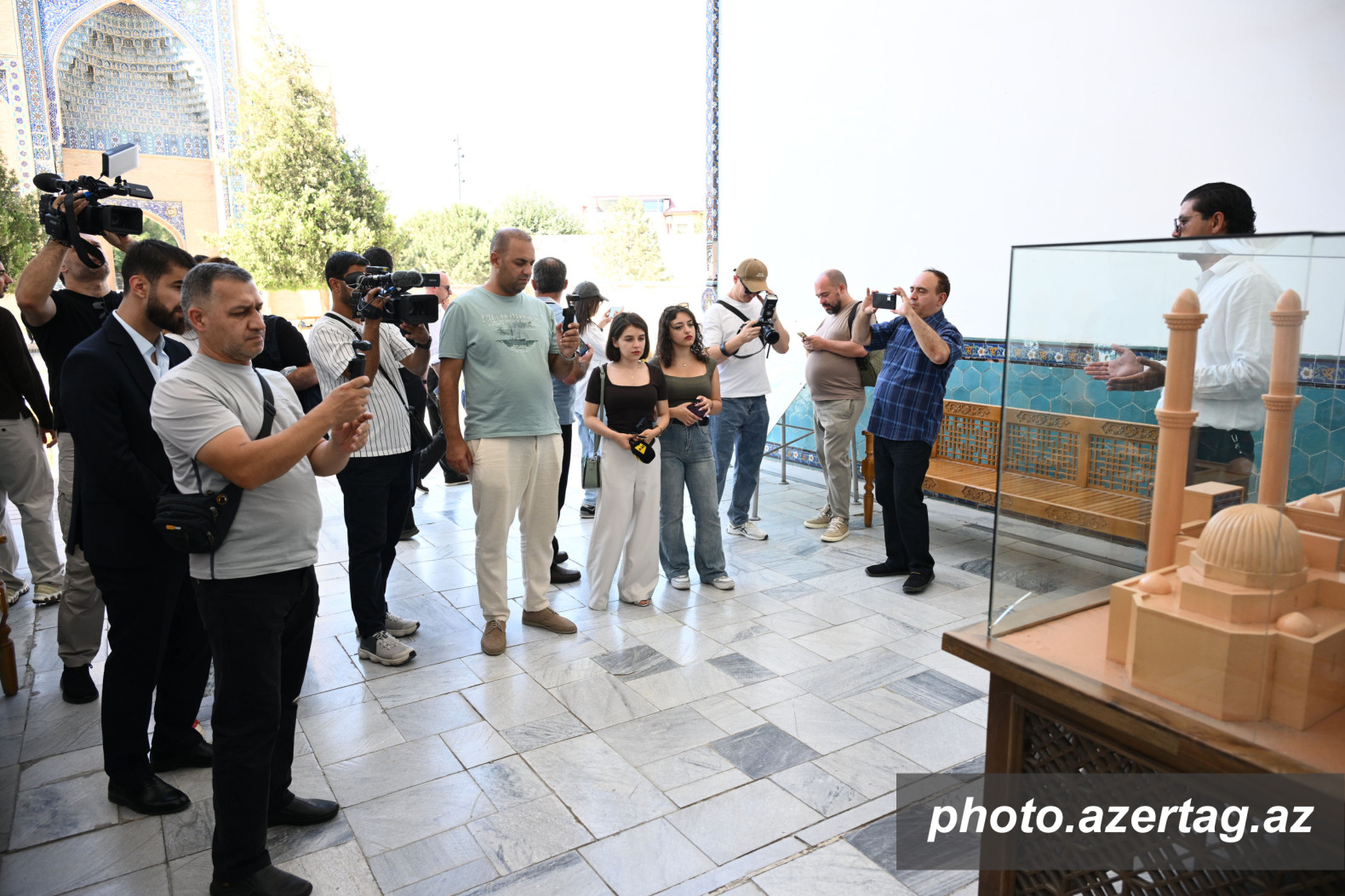
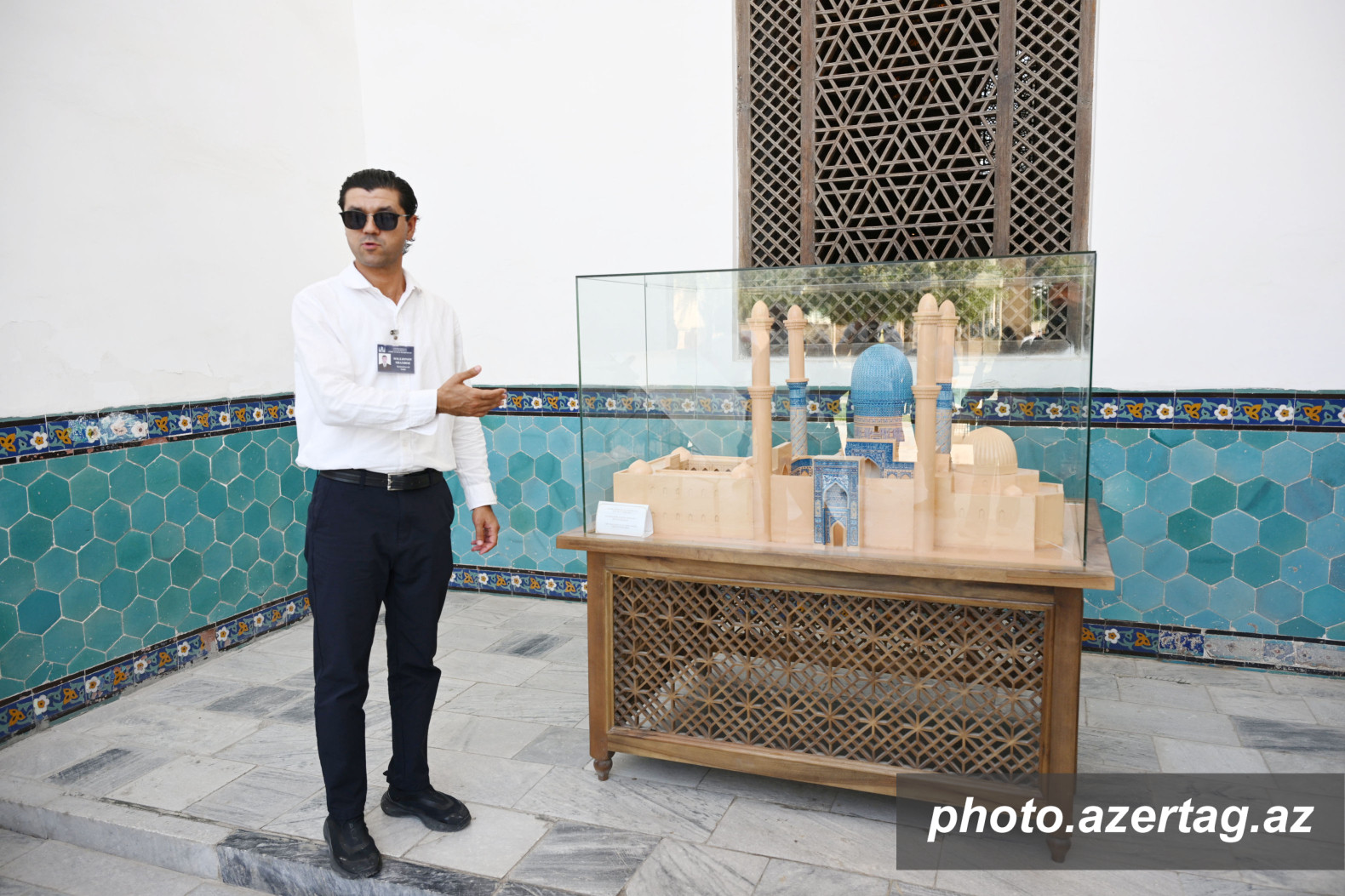
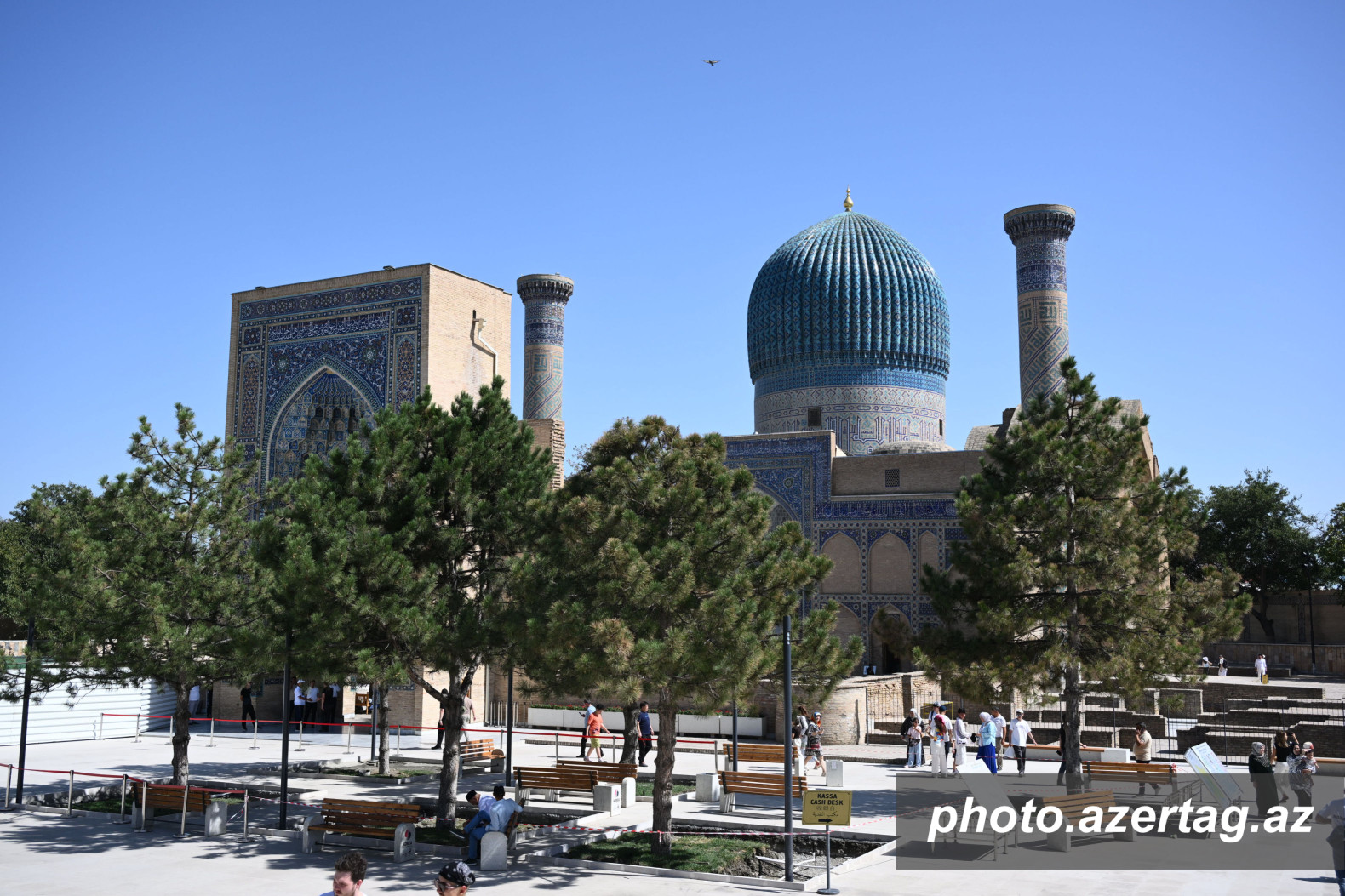
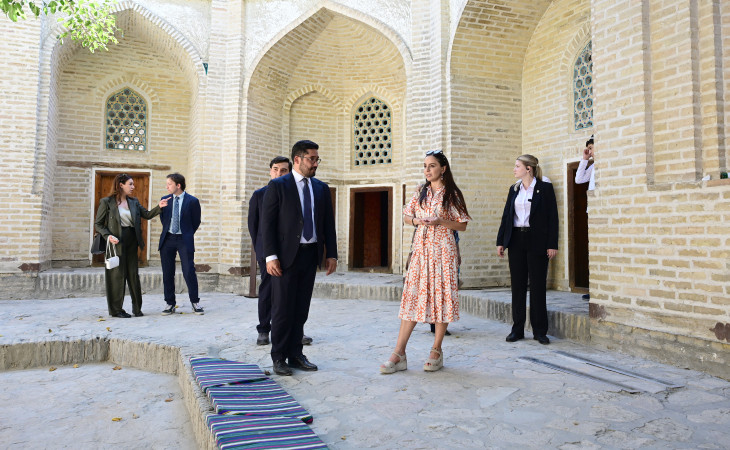
As part of the press tour, Azerbaijani journalists visited the Gur-e-Amir Mausoleum in Samarkand, the city’s most iconic architectural landmark, which is the burial place of Amir Timur and members of the Timurid dynasty.
×
As part of the press tour, Azerbaijani journalists visited the Gur-e-Amir Mausoleum in Samarkand, the city’s most iconic architectural landmark, which is the burial place of Amir Timur and members of the Timurid dynasty.
The participants were informed that “Gur-e-Amir” means “Timur’s Tomb” in Persian. Construction of the architectural complex began in the early 15th century at the initiative of Muhammad Sultan, the grandson of Amir Timur. The site initially housed a madrasa and a khanqah (a Sufi retreat), but its function changed following Muhammad Sultan’s sudden death in 1403.
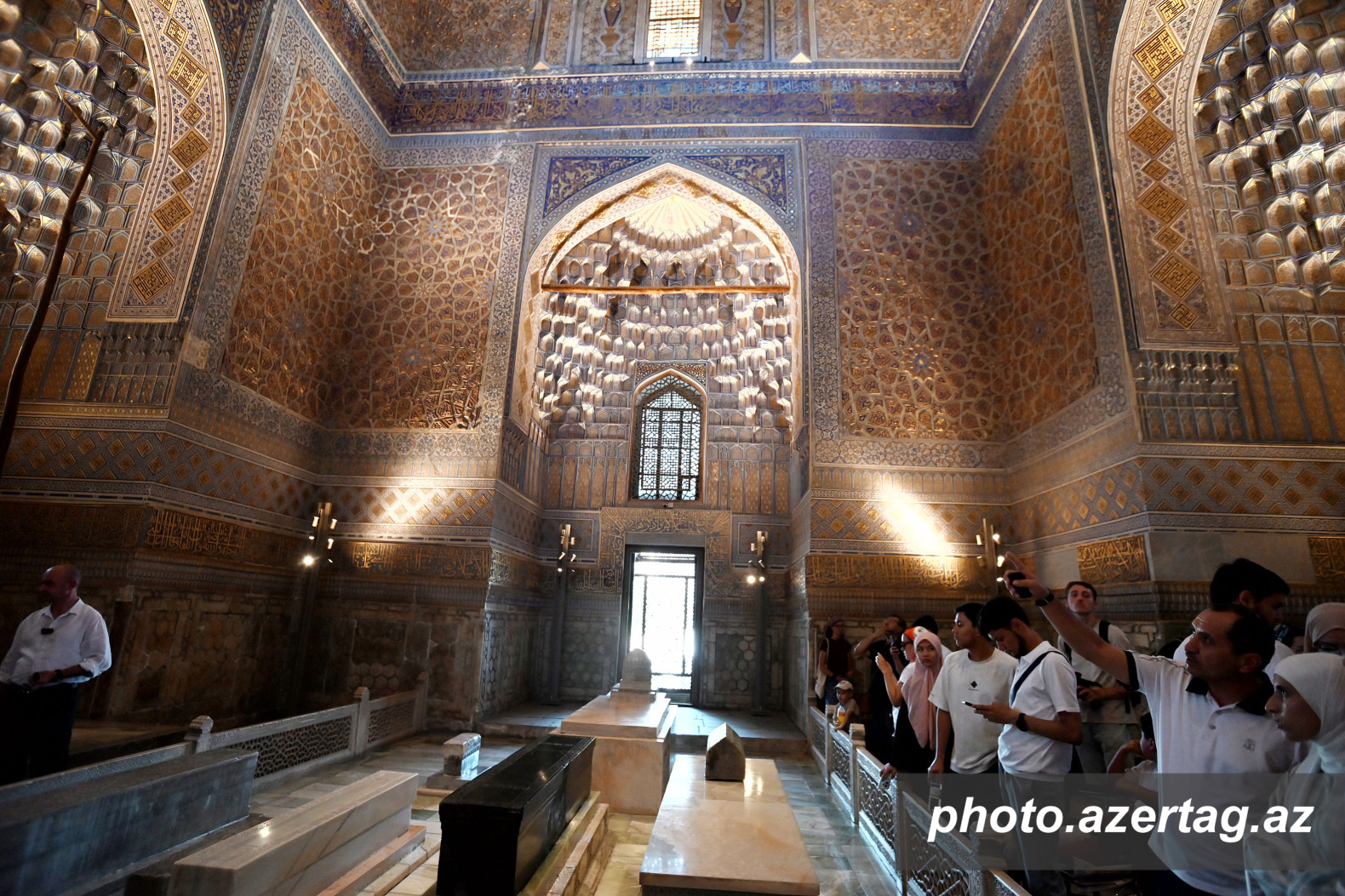
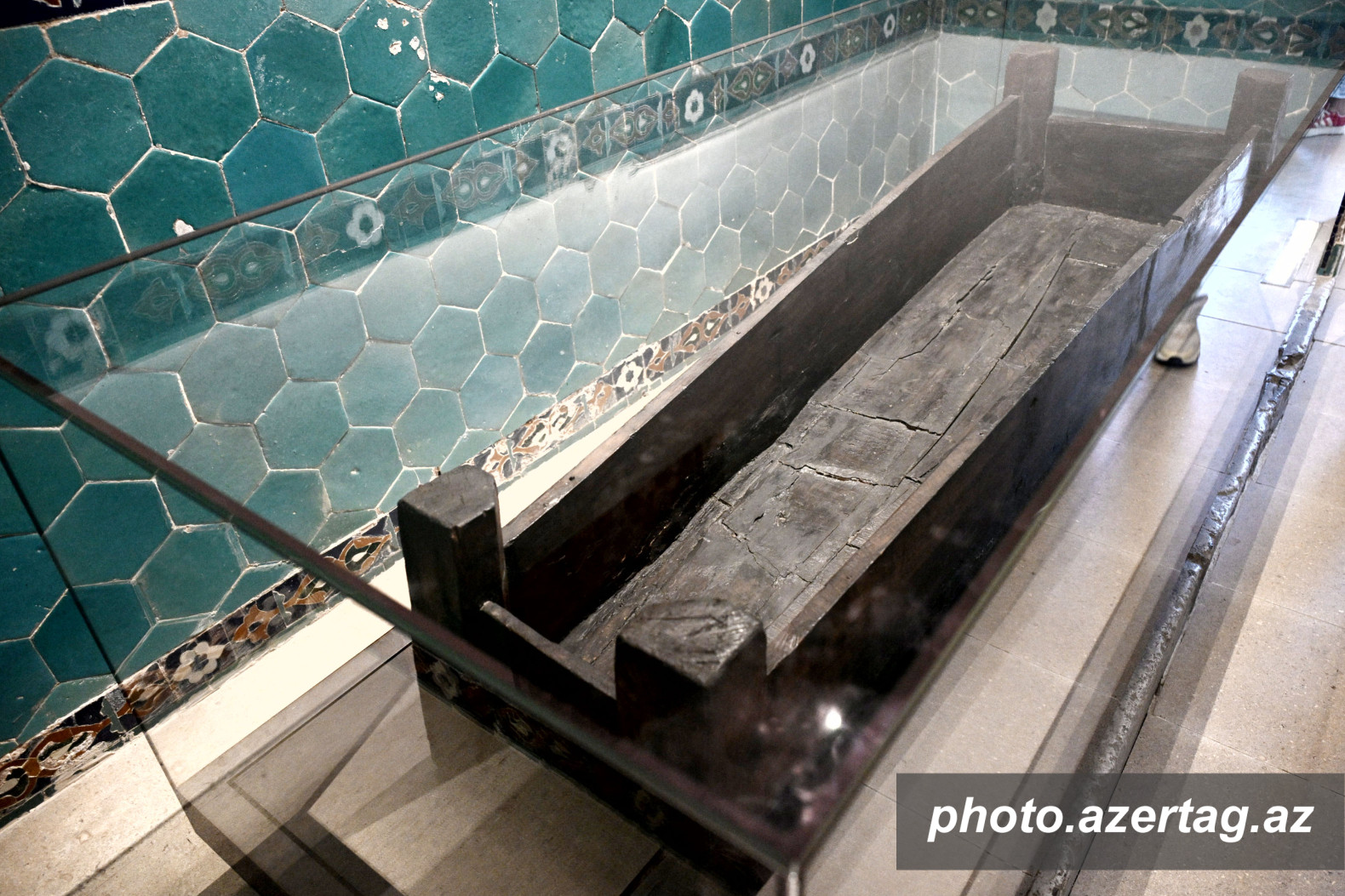
Amir Timur ordered the mausoleum to be built in memory of his beloved grandson, Muhammad Sultan, but died on his way to China in 1405 before its completion. The construction was finished under his grandson, Mirza Ulugh Beg. Gur-e-Amir later became the Timurid family mausoleum, where Amir Timur, his descendants, and spiritual mentor Mir Sayyid Baraka were buried. The mausoleum is also known for Timur’s tombstone, carved from a single piece of dark-green nephrite, while the actual graves lie in an underground crypt beneath the main hall.
The opening of the Timurid tombs in 1941 by a Soviet expedition led by Soviet anthropologist Mikhail Gerasimov attracted particular interest and later inspired the legend of the “Curse of Timur.” Gur-e-Amir is a remarkable Timurid architectural monument, richly decorated with mosaics, glazed brick, gilding, marble, and intricate ornamentation. Its architectural style influenced other major monuments across Central Asia, and it remains one of Samarkand’s most iconic landmarks.